


On the afternoon of May 22, 2026, the School of International Studies (SIS) at Peking University officially launched its “China and the World” lecture series in celebration of the School’s 30th anniversary. The inaugural lecture, held in Conference Room C307, featured Prof. Tang Shiqi, Dean of SIS and Boya Distinguished Professor at Peking University, who delivered a keynote address entitled “Bridging China and the World, Cultivating New Knowledge.” Focusing on the comparison and integration of Chinese and Western knowledge systems, the lecture explored new approaches to knowledge production in political science and international studies. Kang Tao, Secretary of the CPC Committee of SIS, delivered the opening remarks, and the event was moderated by Zhu Yibo, Associate Dean of the School. Open to faculty, students, and alumni, the lecture inaugurated a series of academic events commemorating the School’s 30th anniversary.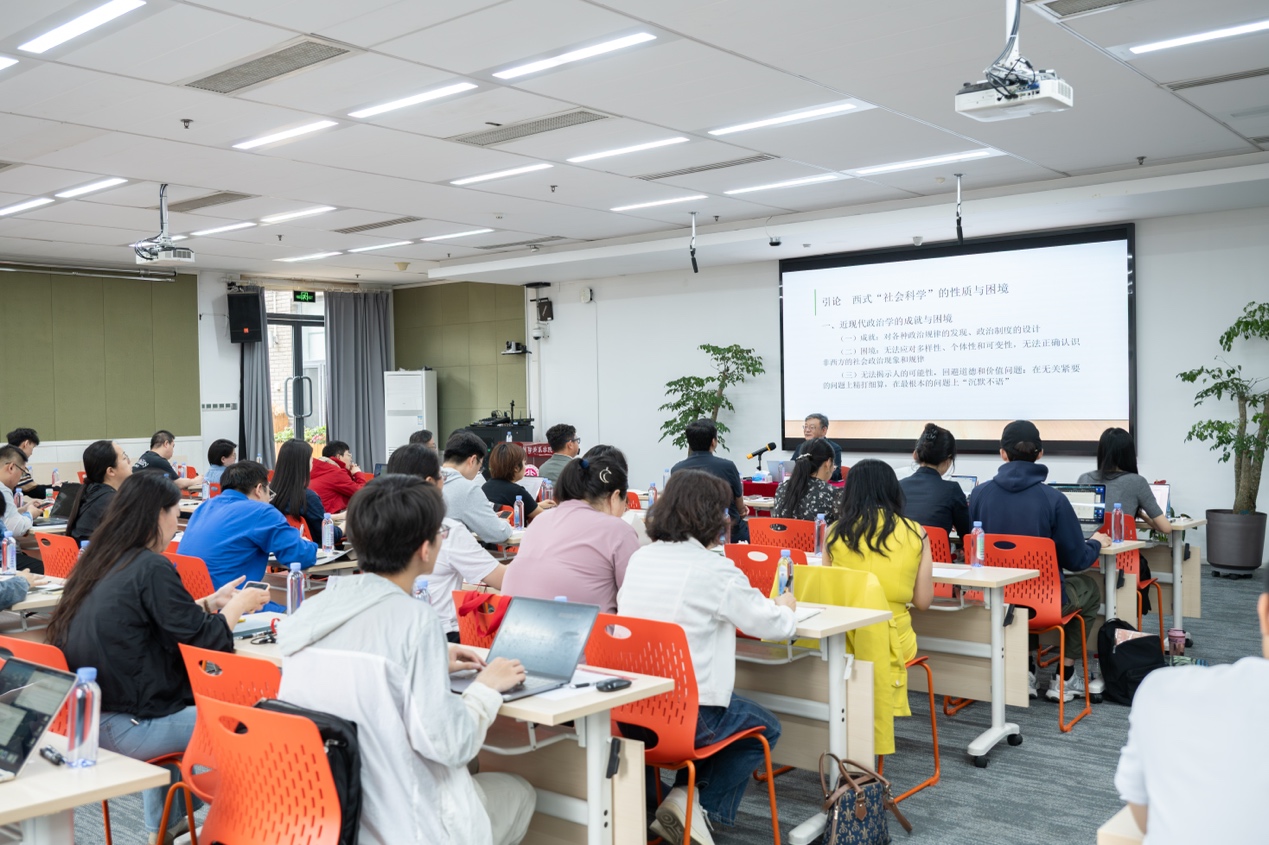
Opening Remarks: Advancing an Independent Chinese Knowledge System
In his opening remarks, Kang Tao emphasized that since its establishment, SIS has remained rooted in China while responding to the evolving demands of the times. He noted that the School has consistently pursued the development of an independent knowledge system in philosophy and the social sciences with Chinese characteristics, style, and vision.
China and the World lecture series forms a key component of the School’s anniversary celebrations. The series will feature distinguished SIS scholars discussing major international issues and global transformations. Together with other anniversary initiatives—including the Future International Leadership Youth Development Lecture Series and the “Reading and Dialogue” Faculty Salon—it aims to foster an academic platform that combines intellectual rigor with meaningful exchange.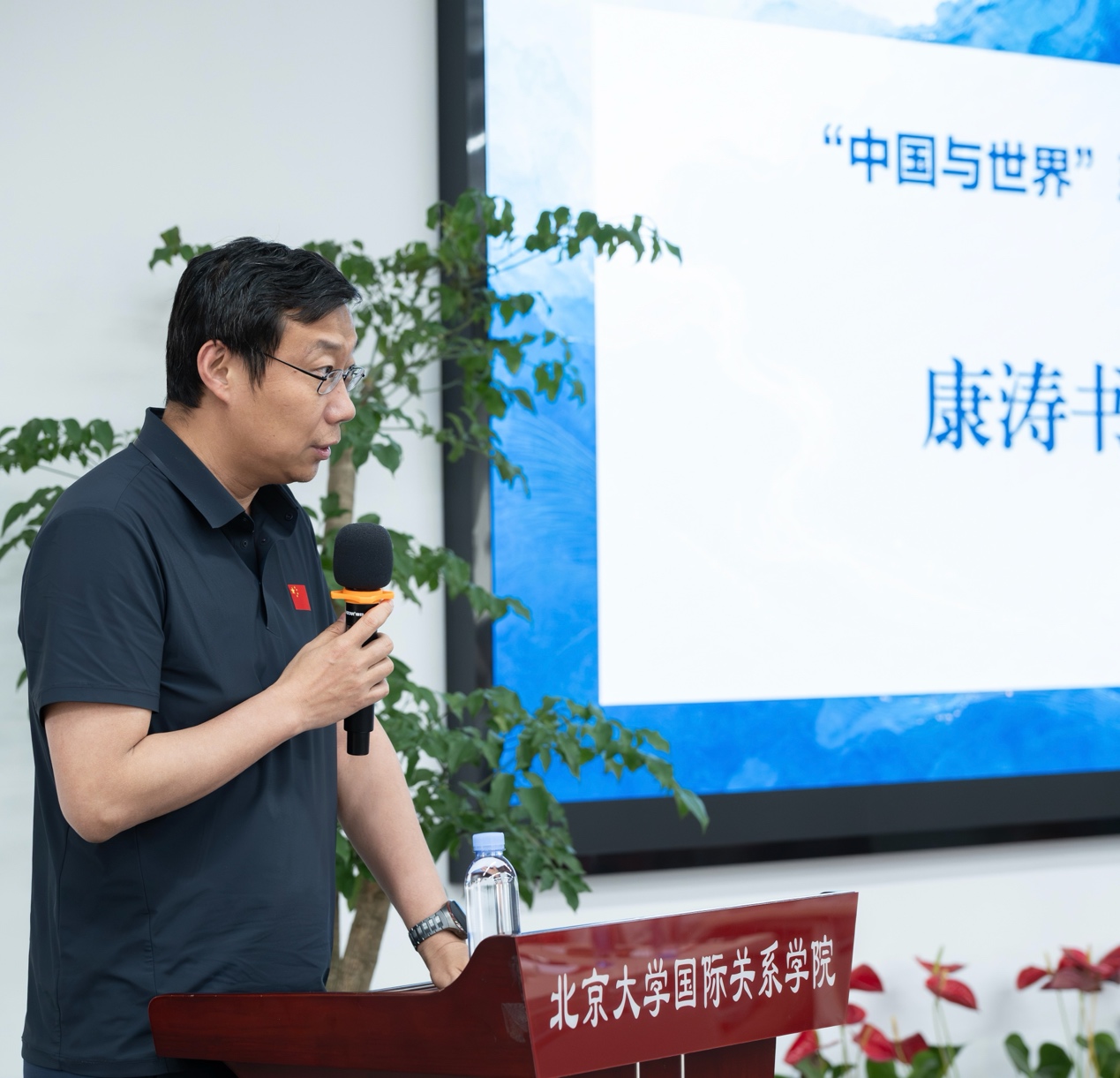
Prof. Tang Shiqi: Integrating Chinese and Western Knowledge Traditions
Drawing upon both disciplinary foundations and contemporary challenges, Prof. Tang examined four interrelated themes: the characteristics and limitations of the Western knowledge system, the core principles of the Chinese intellectual tradition, the possibilities for integrating Chinese and Western approaches, and the contemporary significance of such integration.
Prof. Tang acknowledged the remarkable achievements of Western political science in identifying universal patterns and advancing institutional design. At the same time, he argued that a knowledge system grounded primarily in universalism encounters difficulties in addressing the individuality, variability, and diversity of social phenomena. He further observed that the principle of value neutrality, famously advocated by Max Weber, has led political science to remain largely silent on questions of morality and values, making it difficult to fully appreciate the idea that “human beings embody possibilities.”
Rather than viewing Chinese and Western intellectual traditions as incompatible, Prof. Tang argued that they are fundamentally complementary. Western scholarship, he noted, excels at explaining the universal dimensions of human existence, such as survival and interests, while Chinese intellectual traditions place greater emphasis on individuality, change, and human potential. Looking ahead, he suggested that political science should not only seek to uncover political regularities but also explore possibility, individuality, and value creation. Universities, he emphasized, should cultivate character as well as knowledge. In an era when artificial intelligence is reshaping society, humanity should devote greater attention to creating humanistic values that cannot be replicated by AI.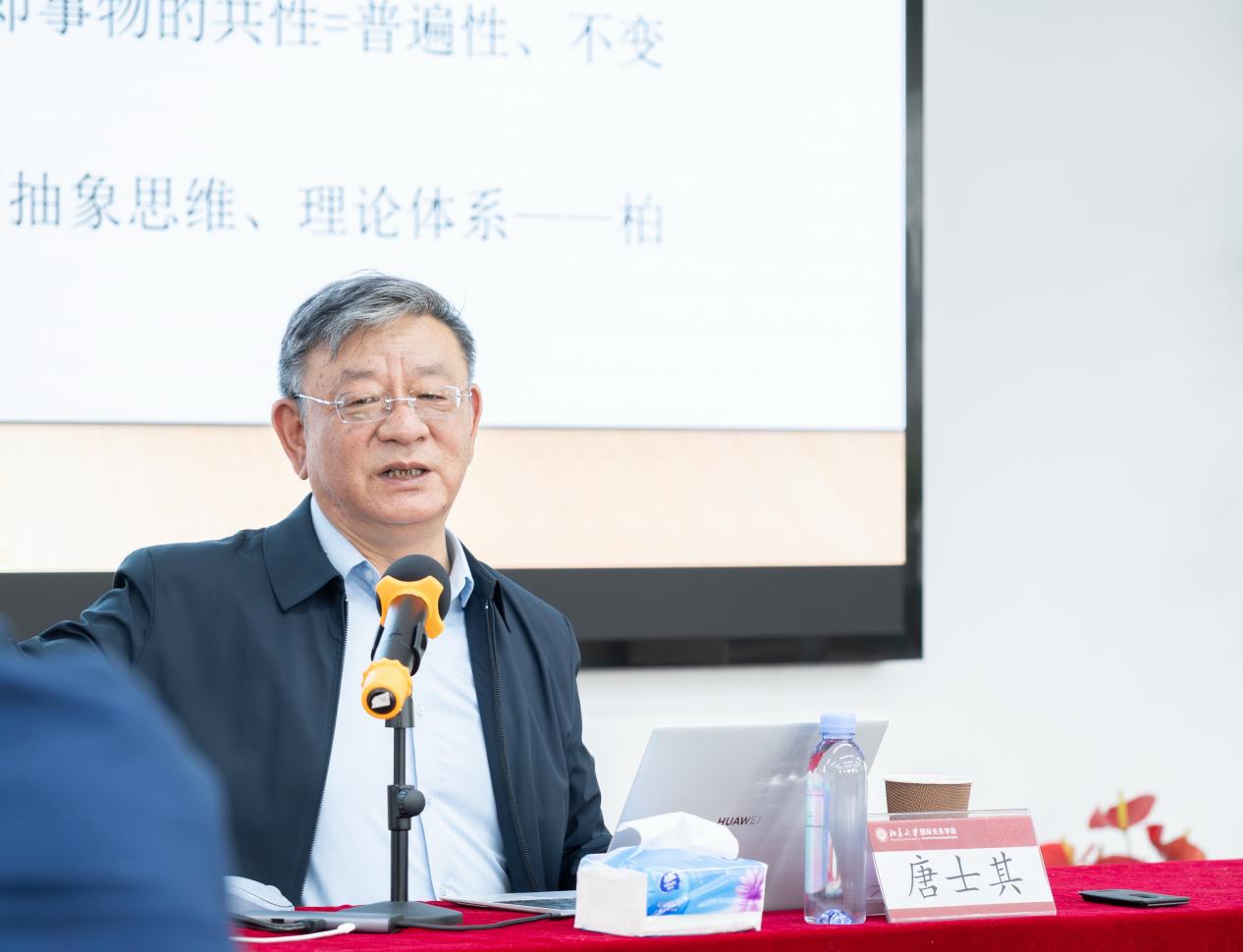
Engaging Discussion on AI, Diplomacy, and Talent Development
During the discussion session, Chinese and international students, together with alumni, actively engaged Prof. Tang on topics including AI-enabled social governance, the relevance of traditional Chinese thought to China’s diplomacy, and the practical training of future international relations professionals. Prof. Tang offered thoughtful and insightful responses, extending the lecture into a lively exchange of ideas.
In his concluding remarks, Zhu Yibo praised the lecture as a compelling demonstration of Prof. Tang’s decades-long commitment to scholarship. He noted that the lecture exemplified the ideal of “bridging China and the world” and established a strong intellectual foundation for the anniversary lecture series.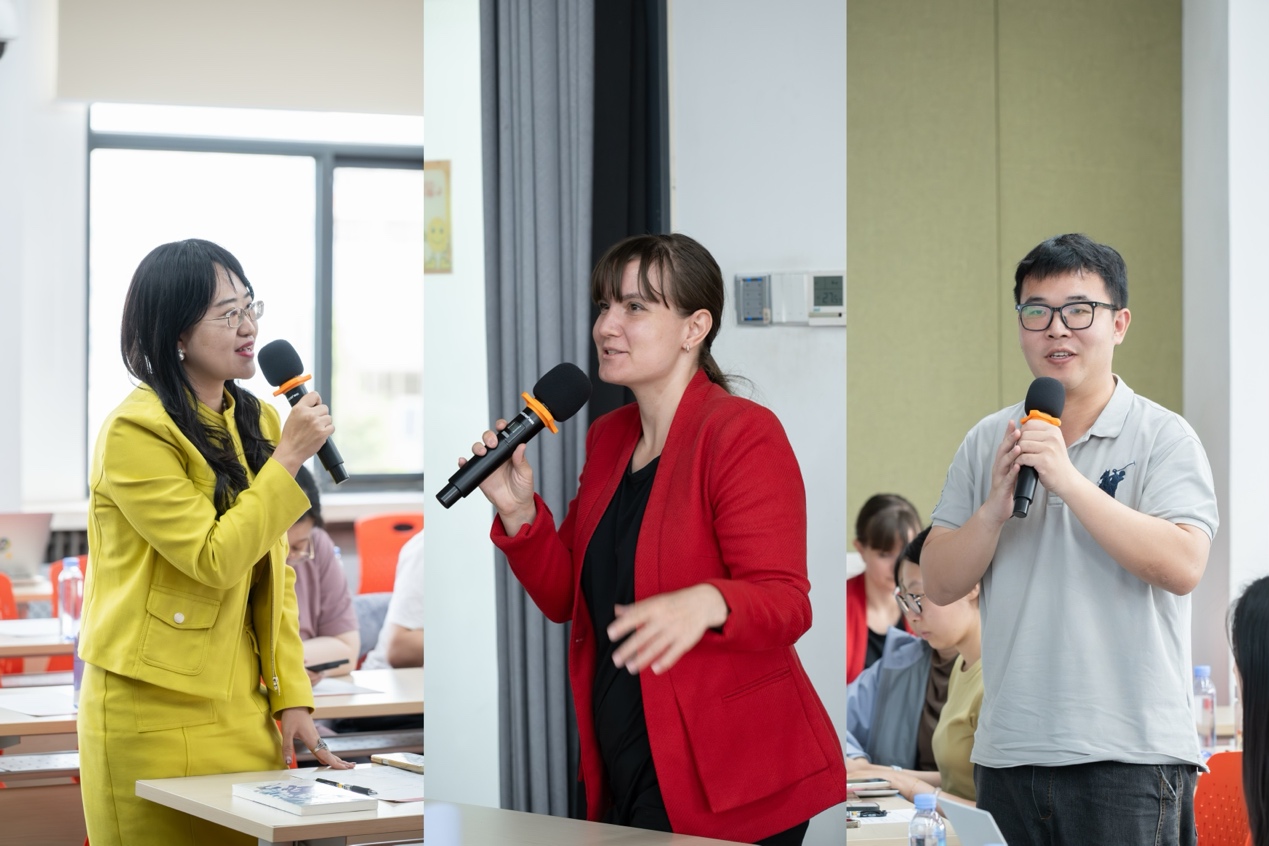
As one of the flagship initiatives celebrating the 30th anniversary of the School of International Studies, the China and the World lecture series will continue to provide a high-level platform for interdisciplinary dialogue and international academic exchange. Through sustained scholarly engagement, the School seeks to contribute to the development of an independent knowledge system for international relations while fostering deeper intellectual collaboration among scholars, students, and alumni.
Written by: Yu Yan
Photos by: Zhou Haokang
Edited by: Zhang Xinyang
Source: SIS News(Chinese)