


On October 24, 2025, the third session of the 2025–2026 Peking University–Waseda University Research Workshop was successfully held at the School of International Studies, Peking University. The workshop, themed “Kazuo Ishiguro: Film and Literature,” brought together Professor Mitsuhiro Yoshimoto from the Graduate School of International Culture and Communication Studies, Waseda University; Associate Professor Weng Jiahui from the Department of Japanese Language, School of Foreign Languages, Peking University; Boya Postdoctoral Fellow Xu Yiran from the same department; and over a dozen faculty and students from both universities. Participants engaged in in-depth discussions on topics including cross-media literary adaptation, translation and culture, reconstruction of historical narratives, and intergenerational transmission of trauma and memory.
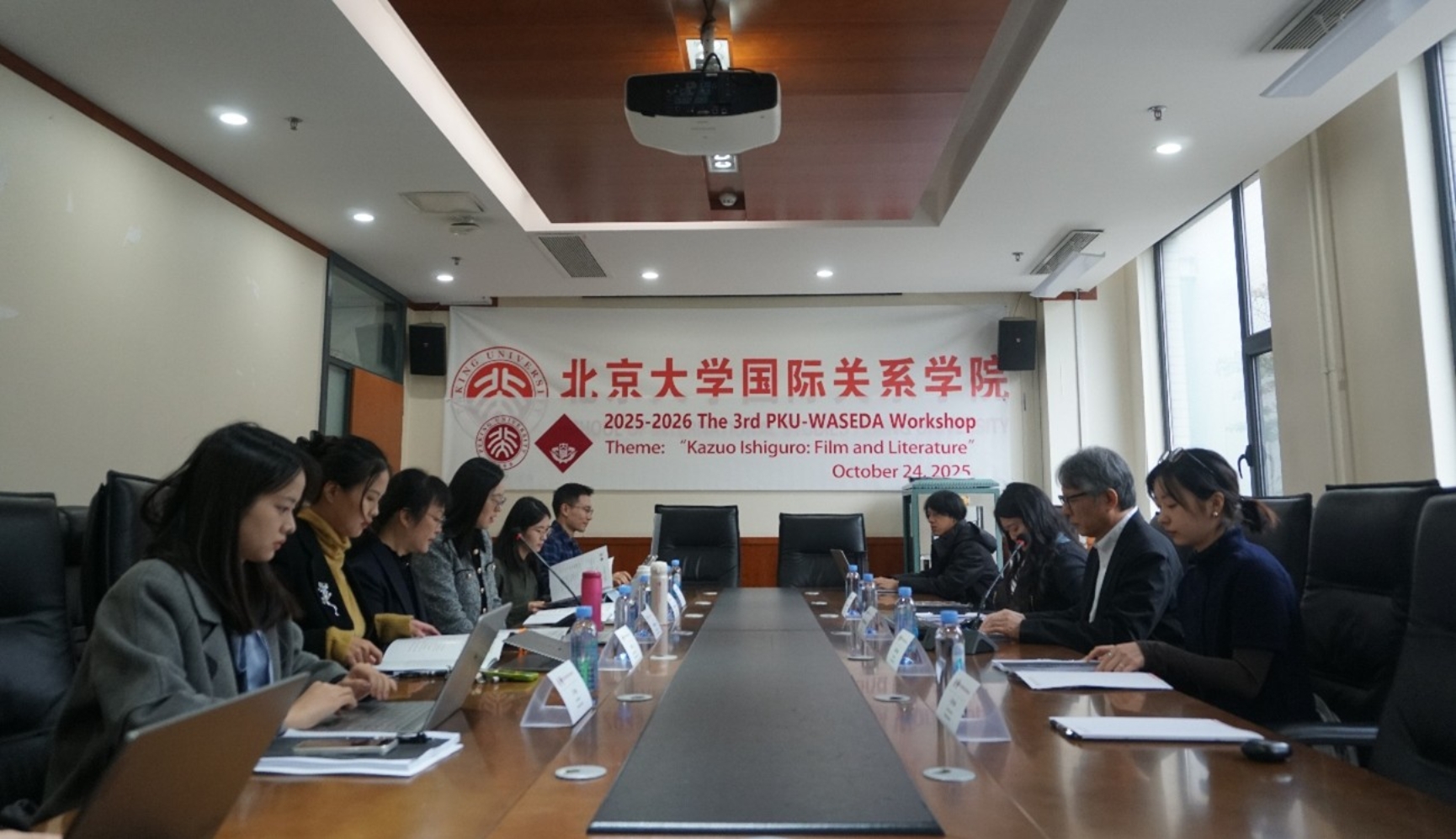
Workshop Venue
Associate Dean Dong Zhaohua of the School of International Studies delivered the opening remarks. She warmly welcomed the visiting delegation from Waseda University and reviewed the fruitful achievements of the workshop series since its inception. She emphasized that this initiative has become an important platform for promoting academic collaboration between the two universities. This session focused on issues of reception and transformation in literary creation, as well as adaptation and reproduction in transnational dissemination. She expressed her hope that this exchange would further broaden the participants’ research perspectives, deepen mutual understanding, and open a new chapter in the academic cooperation between Peking University and Waseda University.
It was Professor Mitsuhiro Yoshimoto’s first visit to China. In his address, he expressed sincere gratitude to both universities for providing such a valuable platform for scholarly exchange and voiced his hope for deeper cooperation across a wider range of academic fields in the future. Associate Professor Weng Jiahui noted that the two universities had established a solid foundation of interaction and collaboration through this platform years ago, and she hoped that this workshop would continue that academic connection, fostering more inspiring discussions and outcomes.
Professor Mitsuhiro Yoshimoto delivered a keynote presentation revisiting the theoretical implications of “adaptation” and “remaking” through a comparative analysis of Akira Kurosawa’s classic film Ikiru (1952) and its British remake Living (2022), scripted by Kazuo Ishiguro. He argued that in contemporary popular culture, nearly all cultural products can be seen as forms of adaptation, suggesting that adaptation should not be regarded as a peripheral practice but placed at the center of cultural studies. Building on this idea, he posed an intriguing question: “What would Ikiru look like if it had been directed not by Kurosawa but by Ozu Yasujiro?” This hypothetical question, he explained, transcends boundaries of nation and era while touching upon key issues in adaptation theory such as imitation, transformation, media specificity, and fidelity. Rather than simply comparing the two films, Yoshimoto encouraged reflection on the normative assumptions and cultural logics behind adaptation and remaking, thereby advancing theoretical inquiry in adaptation studies.
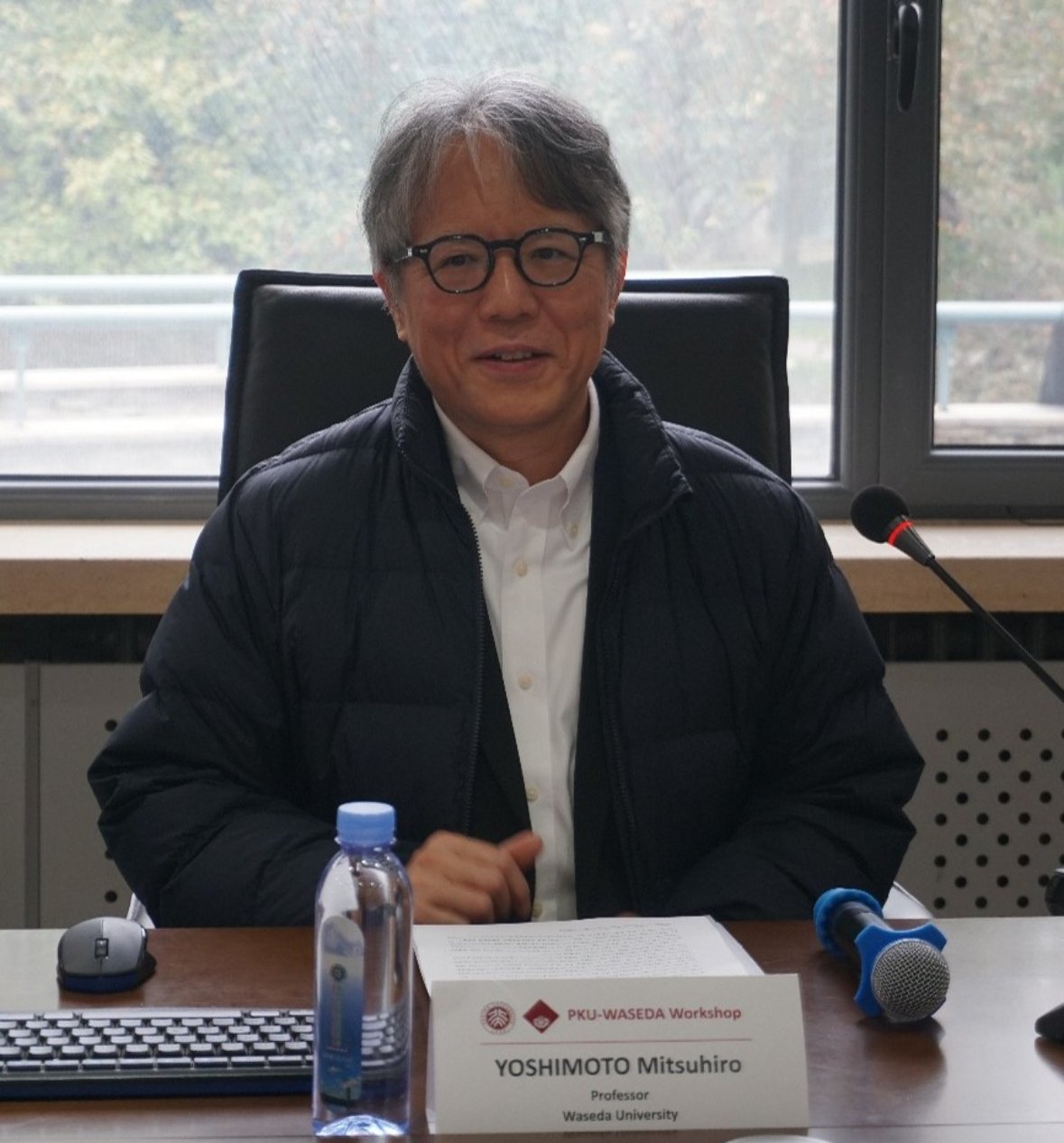
Professor Mitsuhiro Yoshimoto’s presentation
Associate Professor Weng Jiahui from the Department of Japanese Language, Peking University, applied Kato Shuichi’s theory of “hybrid culture” to examine the reception and transformation (juyō to hen’yō) of foreign literature in Oe Kenzaburo’s works. Focusing on the three key concepts of “humanism,” “translated literature,” and “hope,” she analyzed the intellectual dimension, methodological traits, and inherited lineage of Oe’s engagement with foreign literary influences. Weng emphasized Oe’s unique ability to recontextualize external cultural elements. She also presented a rare manuscript of Oe’s speech delivered at Peking University, in which Oe discussed his spiritual connection with Lu Xun’s Diary of a Madman. Oe observed that Lu Xun’s reflection on reason and madness deeply inspired his own literary exploration of human ethics and hope. The presentation of this precious document offered participants an exceptional historical and intellectual perspective, underscoring the profound resonance between Chinese and Japanese literature in the realm of modern thought.
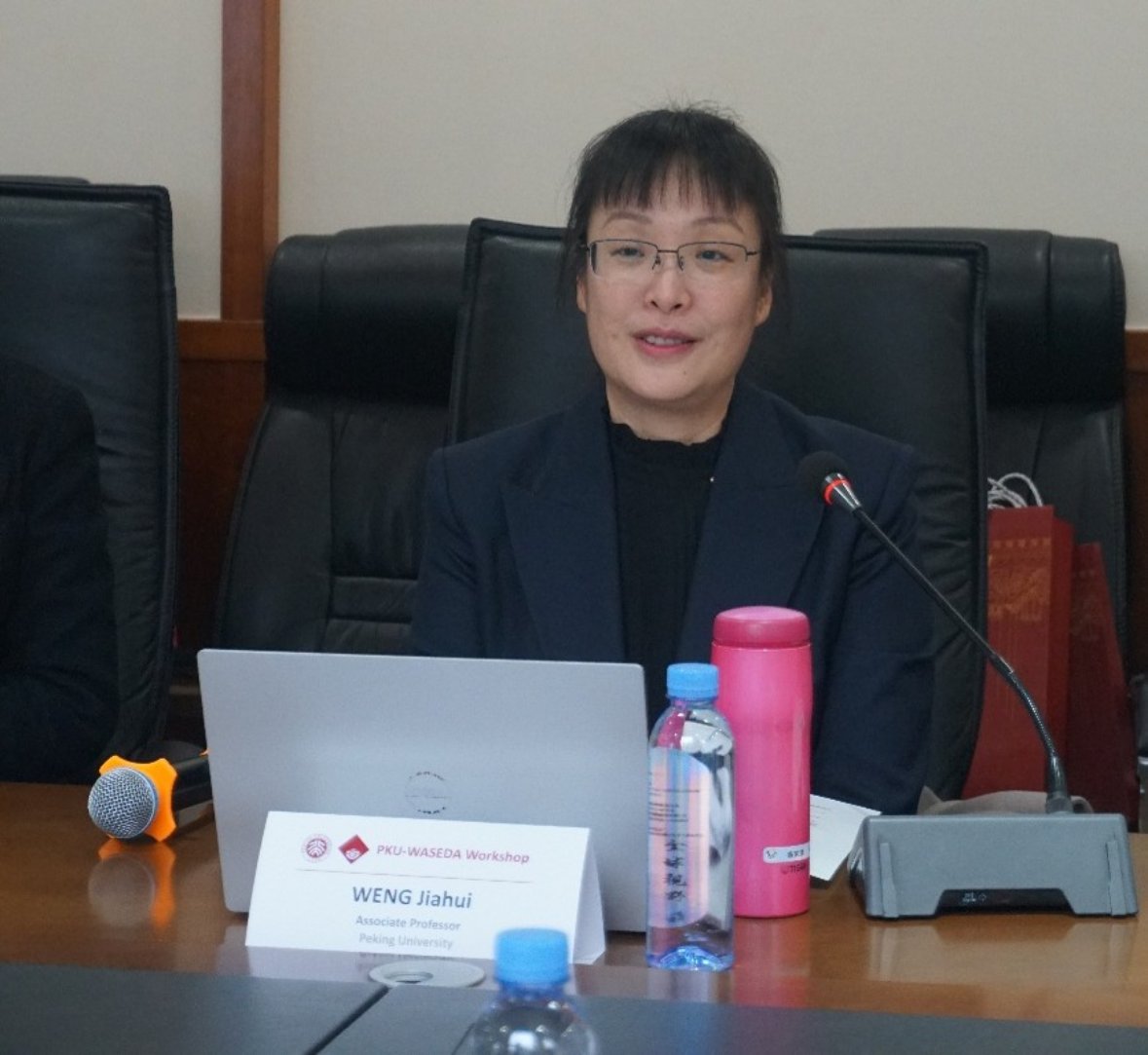
Associate Professor Weng Jiahui’s presentation
In subsequent presentations, Dr. Xu Yiran, Boya Postdoctoral Fellow at the Department of Japanese Language, compared Ishiguro’s short story A Strange Sadness Sometimes and his novel A Pale View of Hills, noting a creative shift from direct depiction to implicit metonymy, and from external witnessing to representations of parental silence and distorted memory—demonstrating Ishiguro’s deepening engagement with themes of memory and trauma.
Chen Kerong, Ph.D. candidate at Waseda University, analyzed The Unconsoled through Lacan’s concepts of metaphor and metonymy, exploring the novel’s metaphoric reflections on modernity and the crisis of meaning.
Zhao Lihua, Ph.D. candidate from the Department of English, Peking University, examined film adaptations of Edith Wharton’s novels between the 1910s and 1930s, focusing on the 1918 MGM film The House of Mirth. By investigating the influence of censorship, moral constraints, and audience expectations, she discussed the tension and compromise between literary, moral, and commercial considerations in early Hollywood cinema, framing it as a “softened tragedy.”
Gao Yang, M.A. student at Waseda University, analyzed the use of landscape in Ishiguro’s The Buried Giant, highlighting the cultural attributes of natural imagery and its effects on character interaction.
Finally, Li Jing, a 2025 master’s student in Japanese at Peking University, employed Stuart Hall’s theory of cultural representation to explore the formation and fluidity of “Japaneseness” in Ishiguro’s An Artist of the Floating World. She demonstrated how “Japaneseness” is continuously constructed and rewritten through the interweaving of history, power, and personal memory, offering new insights into cross-cultural identity and the literary imagination of “Japan.”
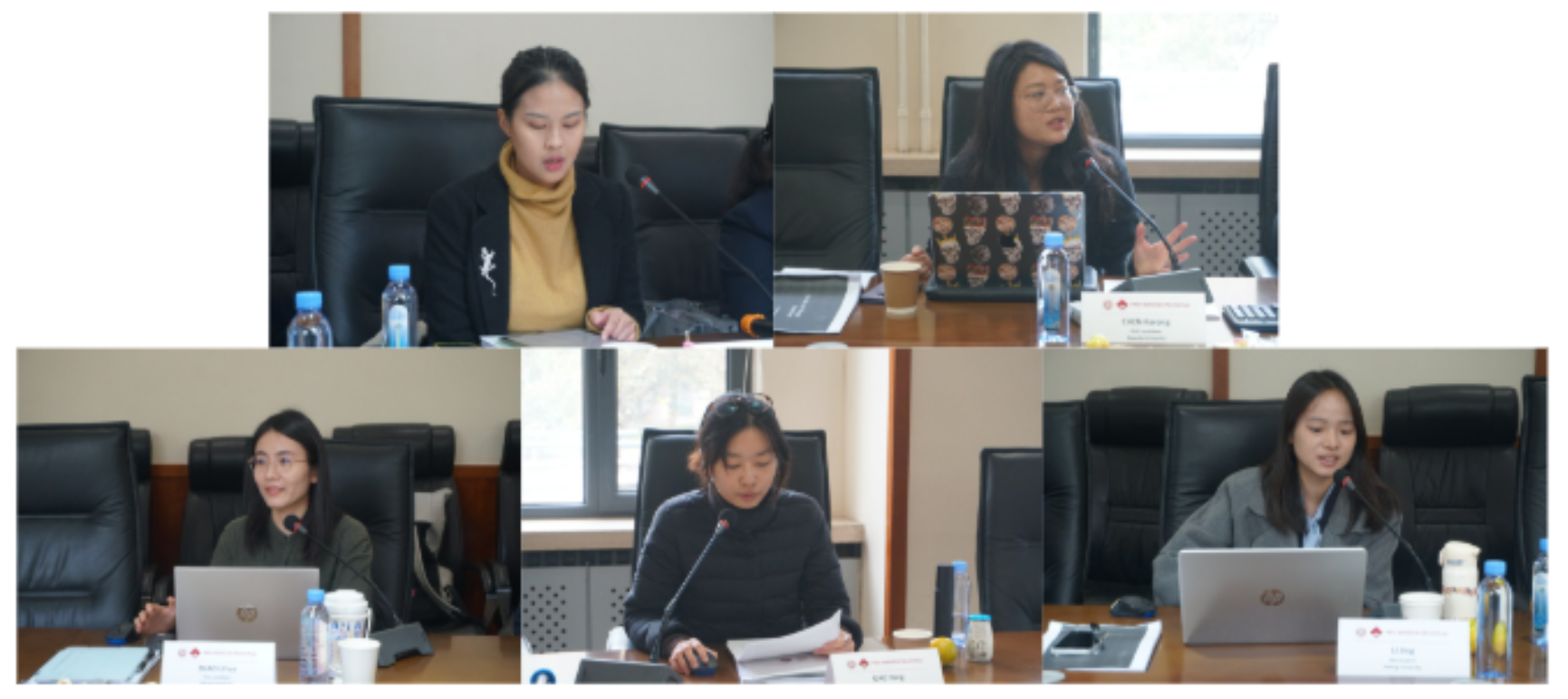
Presentations by Xu Yiran, Chen Kerong, Zhao Lihua, Gao Yang, and Li Jing
During the open discussion session, participants exchanged ideas and posed questions concerning the redefinition of historical fiction, reconstruction of historical narratives, and the role of unreliable narrators.
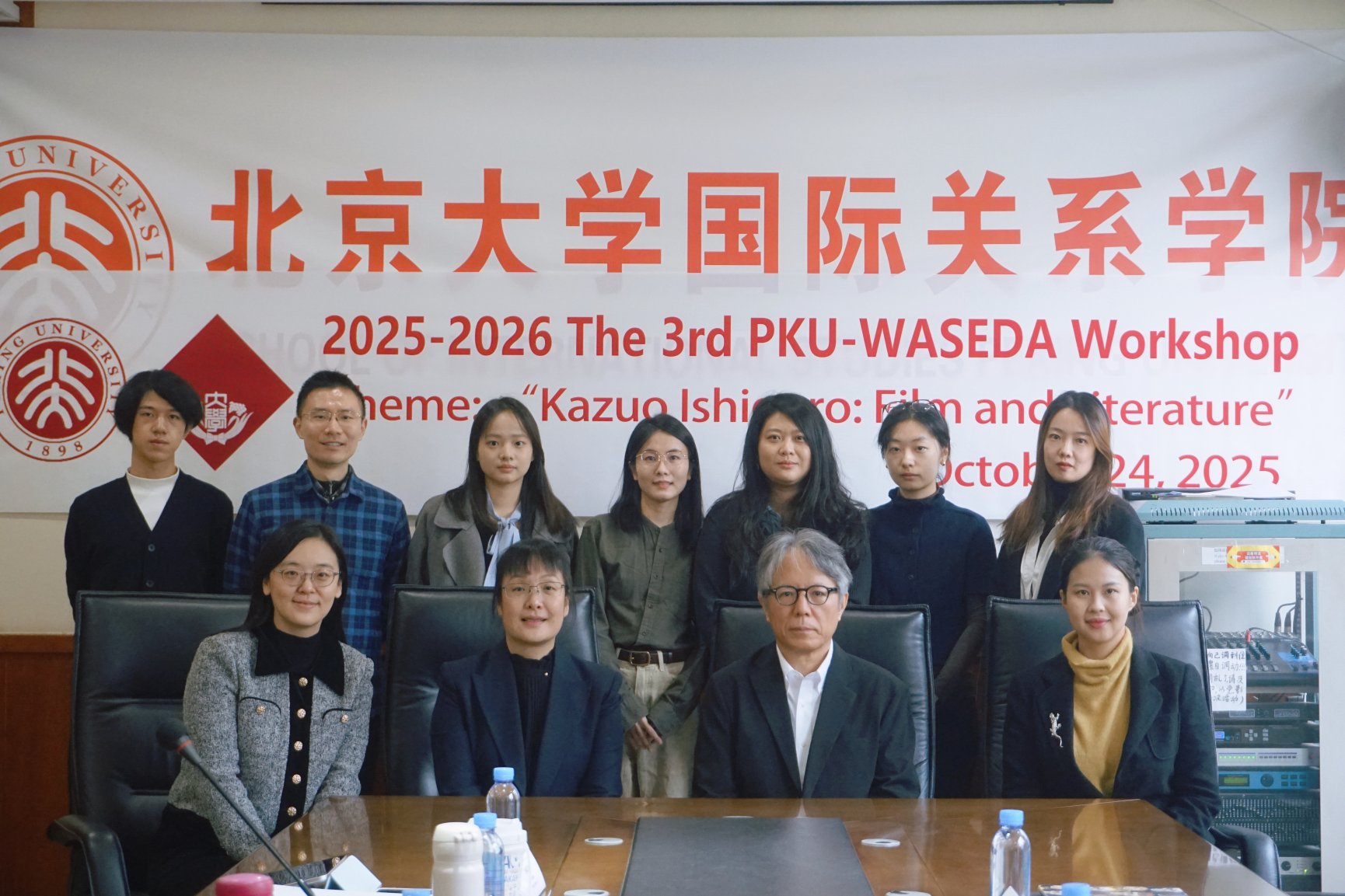
Group Photo of Participants
In conclusion, Professor Yoshimoto expressed his heartfelt gratitude to the School of International Studies for its thoughtful organization of the event. He voiced his hope that this workshop would serve as a stepping stone for deeper exchanges and collaborations between the two universities in the fields of culture, literature, and film in the future.
Written by: Xu Yiran
Photos by: Liu Hao
Source: SIS News(Chinese)